MyLifts
Arrive with a short list and time to learn
Bring comfortable training clothes, water and whatever your gym requires. Check how to enter, where to leave belongings and how to ask for help. If possible, book an induction or choose a time when staff can show you the stations in your plan. Learning the setup is part of the session.
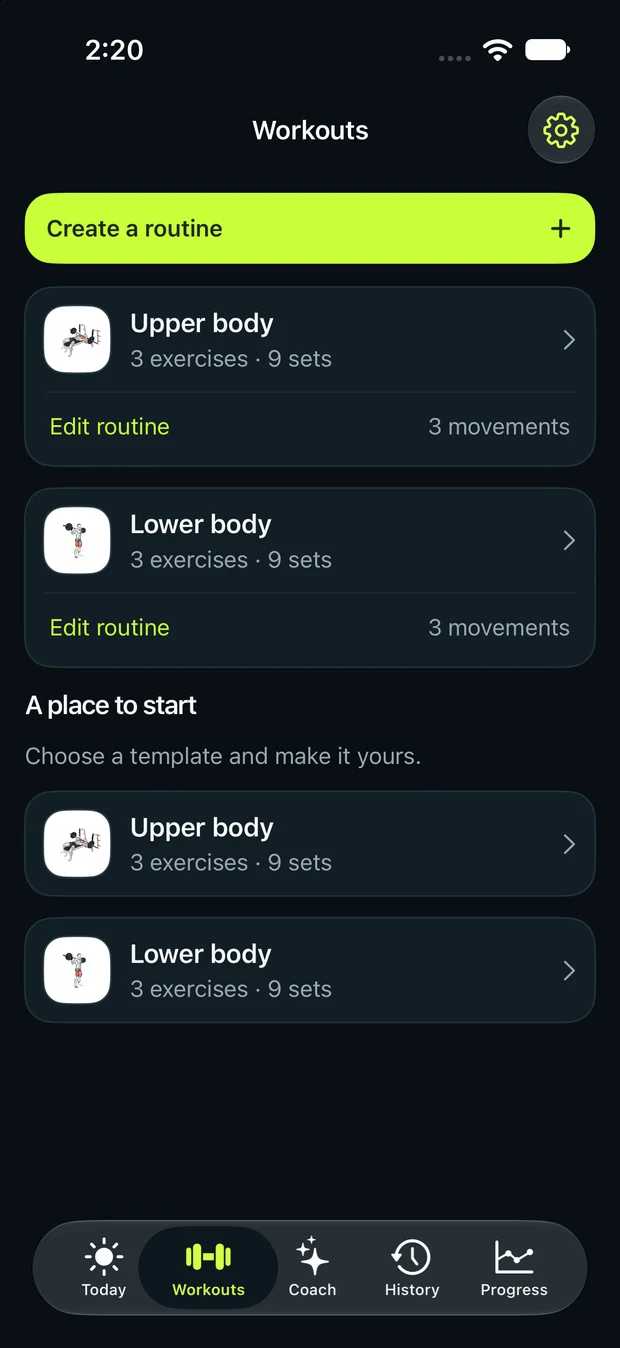
Pick one manageable full-body preview rather than collecting exercises from several routines. Read it beforehand and identify any unfamiliar movements. Have a simple alternative ready if a station is busy, but ask for a demonstration before substituting a machine you have never used. A shorter session with familiar equipment is a reasonable first visit.
Warm up and learn before counting working sets
Begin with easy movement and light practice of the exercises you intend to do. Keep the warm-up comfortable rather than exhausting yourself before the main work. NASM’s beginner guidance prioritises simple repeatable movement and gradual progression; the first day does not require a maximum-lift test.
At each station, read the placard, adjust the supports and practise with an easy selection. Choose a load you can control through the planned repetitions while leaving some effort in reserve. Rest between sets, stop for pain or a clear loss of control, and ask staff when the equipment or movement feels uncertain.
Finish with a record and a realistic next visit
Write down the exercises you actually did, the weights and units, completed repetitions and any seat settings. Note a useful observation such as “needed help finding the chest press start lever.” An honest incomplete plan is more useful than marking every set complete because you meant to do it.
Put equipment back according to the gym’s rules, wipe contact surfaces using the supplied method and leave the area ready for the next person. Before leaving, choose a realistic next training day with recovery between demanding sessions. ACSM’s 2026 guidance emphasises consistent participation and individualisation; you can build the programme as you gain experience rather than doing everything at once.
Common mistakes to avoid
- Treating the first visit as a test of how exhausted you can become.
- Skipping an unfamiliar machine’s induction because another member looks busy.
- Planning a week you cannot repeat after the initial burst of enthusiasm.
References
- NASM: simple repeatable beginner strength-training routines
- ACSM 2026 guidance: consistency and individualisation
Independent training guidance from MyLifts. The related workout is an editable example, not an individual assessment.