MyLifts

Three-day dumbbell workout plan

Build a week around dumbbells without needing machine access. Start with a full-body session, then split the remaining work into upper- and lower-body days so each visit has a clear purpose.

An example strength-training week for adults with suitable dumbbells and a stable bench or safe support. Review each session and adjust your weights and working sets before you begin.

Your example week

  1. Monday

    Full-body dumbbell workout

    Whole-body session with dumbbells and a bench; about 45 minutes.

  2. Tuesday

    Rest or easy activity

    No scheduled lifting; allow recovery after the full-body session.

  3. Wednesday

    Rest or easy activity

    Optional comfortable aerobic activity or another recovery day.

  4. Thursday

    Upper-body dumbbell workout

    Presses, row, shoulder accessories and curls; about 45 minutes.

  5. Friday

    Rest or easy activity

    No scheduled lifting before the lower-body session.

  6. Saturday

    Lower-body dumbbell workout

    Squat, hinge, split squat and calf raise; about 40 minutes.

  7. Sunday

    Rest or easy activity

    Recover and choose next week’s loads from your session notes.

Open each session for its exercises, sets, rest periods and individual download. Review and adapt it before training.

Equipment to arrange before you start

Use dumbbells you can handle safely and a stable bench for the full-body session and supported rows. The upper-body session starts with a floor press, so it does not require a bench for that movement.

One fixed pair may be too light for your legs yet too heavy for shoulder raises. Adjustable dumbbells or a choice of pairs makes it easier to use an appropriate load for each exercise. Keep enough clear floor space to set weights down safely.

Why the week mixes full body and split days

Monday practises all the main patterns in one visit. Thursday focuses on the upper body; Saturday focuses on the lower body. This gives the week two exposures to each area without repeating the complete full-body workout three times.

The weekday spacing leaves room between overlapping sessions. Change the labels to fit your week, but keep recovery time between Monday and the later upper or lower session.

Set a useful starting load

Warm up first, then choose a load that lets you complete the reps under control with a few more possible. Use bodyweight for split squats until balance is steady, and a hand support when useful.

Write down the load for each dumbbell, not an ambiguous combined total. For example, note two 8 kg dumbbells rather than simply 16 kg, and use the same convention on your next visit.

Progress when the movement is ready

Keep the listed sets and reps as your reference. Once all working sets are manageable, try a small available load increase in a later session. If your next dumbbell jump is too large, keep practising at the current load.

Do not rush the lowering phase, shorten the range or swing your torso to claim heavier reps. Repeating a controlled load is useful training even when the number does not change.

Simplify the week when life is busy

If you can train only twice, use the full-body session on two separated days rather than keeping only the upper and lower visits. That makes each visit a broader session.

Health New Zealand recommends adding muscle strengthening at least twice weekly alongside other activity. This dumbbell arrangement is an editable example of how to organise that part of your week, not a source-issued programme.
Planning references

Preview the sessions

All workouts ↗

Questions before you start

Can I follow this at home?

Yes, with suitable dumbbells, safe floor space and stable support for the movements that need it. Use the floor-press alternative if you do not have a bench, and do not improvise with furniture that can roll or tip.

What if my dumbbells are not adjustable?

Use the pair only for movements where it is appropriate. Choose an easier variation or bodyweight for movements where it is too heavy. If it becomes too light, add suitable equipment rather than endlessly extending every set.

Is this plan suitable for everyone?

It is a general adult training template, not a personalised rehabilitation, pregnancy or medical exercise plan. Adjust exercise choice to your experience and seek individual help when a movement or health condition needs it.

Keep the plan.
Track the progress.

Pick your training space. Your sets, weights and rest times belong together.

MyLifts

A focused workout tracker for your lifts and routines. Explore the next chapter for iPhone and iPad.

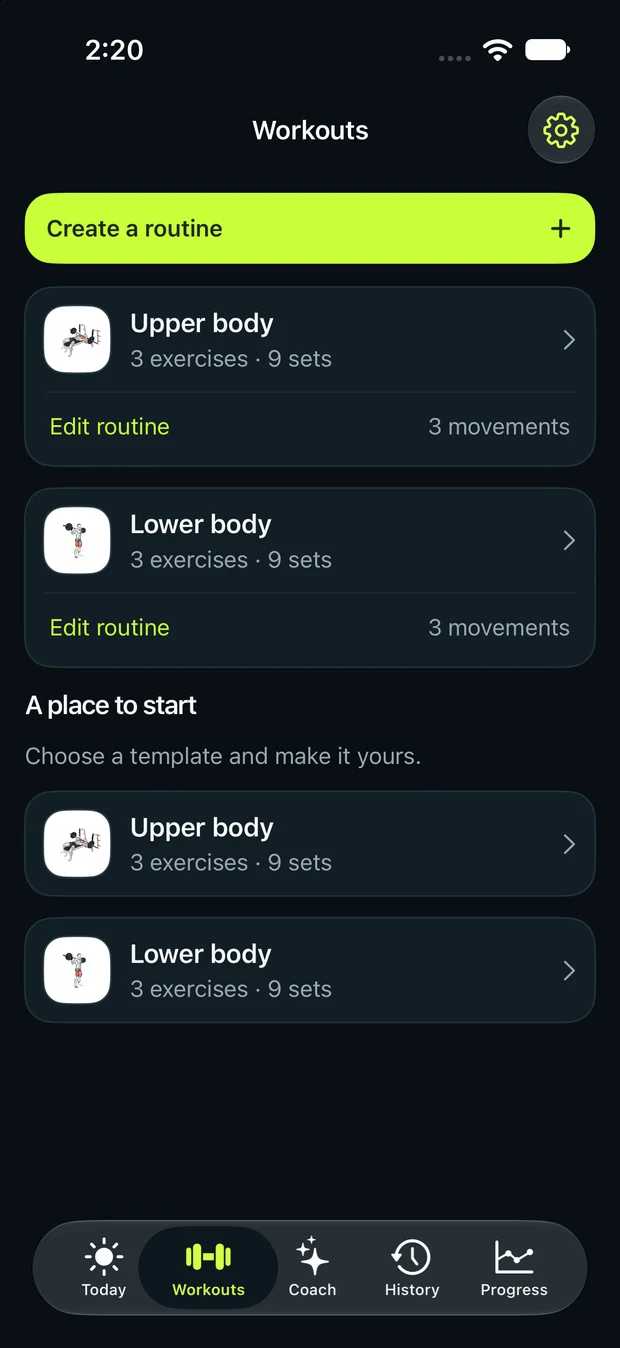
MyLifts routine library preview